Water Damage Restoration Chatsworth, CA
24/7 water damage restoration in Chatsworth, CA. The extraction crew pulls standing water off slab floors, the drying team dries the structure to the IICRC S500 standard, and every reading goes into the claim file.
(888) 578-6508Water under the tile? Phone the crew now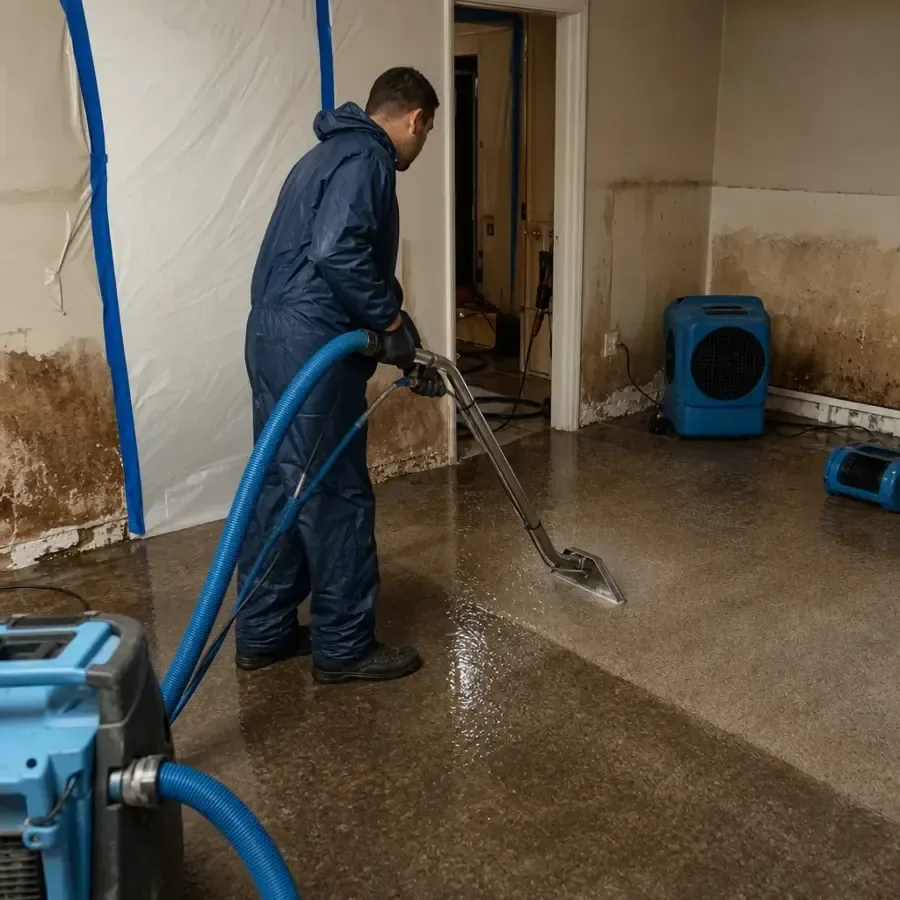
What to do in the first hour after a leak
The first hour decides how much of the house dries in place and how much gets cut out.
- 1
Close the main valve
On most slab ranch homes the shutoff sits near the front hose bib or in a box by the curb. Turn it clockwise until it stops.
- 2
Cut power to wet rooms
Switch off the breakers that feed wet rooms, but only when the panel itself is dry and easy to reach.
- 3
Shut the attic AC down
If water drips from the ceiling in summer, turn the thermostat off so the air handler stops making condensate.
- 4
Photograph before moving
Take wide shots and close-ups of the water line on walls, the source and wet contents before anything is lifted.
- 5
Lift rugs, then phone
Pull rugs off wet floors and set furniture legs on foil or blocks. Mold can start in 24 to 48 hours.
Water Damage Restoration Services in Chatsworth, CA
Water and sewage only, from the first extraction pass to the last dry reading, across ZIP 91311 and 91313 and the neighbouring Valley communities.
 Water Extraction and RemovalTruck-mounted units pull standing water off tile, carpet and slab before it reaches the drywall.How it is handled
  Slab Leak Water DamageCopper pinholes under postwar slabs traced, flooring lifted and the concrete dried to a verified reading.How it is handled
  Burst and Pinhole Pipe LeaksSplit supply lines and pinholes inside walls opened up, extracted and dried inside the cavity.How it is handled
  Storm Runoff and Flash Flood CleanupHillside runoff and mud from winter storms removed as contaminated water, then dried out.How it is handled
  Roof Leak Water DamageRain through worn tile, flat roofs and flashing traced into the attic and dried from the top down.How it is handled
  Ceiling Leak Water DamageBath, toilet and supply leaks from upstairs traced, the drywall opened and the joist bays dried.How it is handled
  AC Condensate Leak CleanupClogged condensate lines and overflowing attic pans that drip through ceilings in the summer heat.How it is handled
  Water Heater Leak CleanupGarage, closet and attic tank failures extracted before cabinets and stored boxes soak through.How it is handled
  Appliance and Supply Line LeaksWasher hoses, dishwashers, ice makers and toilet supplies that flood kitchens, laundry rooms and baths.How it is handled
  Sewage Backup CleanupToilet, tub and cleanout backups treated as Category 3, with porous materials removed.How it is handled
  Structural Drying and DehumidificationFraming, subfloor, plaster and concrete dried to within 2 to 4 points of a dry reference.How it is handled
  Commercial Water DamageBusiness parks, offices, shops and clinics dried in phases so the work day can keep going.How it is handled
 Structural drying held to the IICRC S500 standard
A finished dry-out and a cosmetic one differ in the order of the work. Local restoration pros follow the same five steps on every loss, from a hall bath to a whole slab.
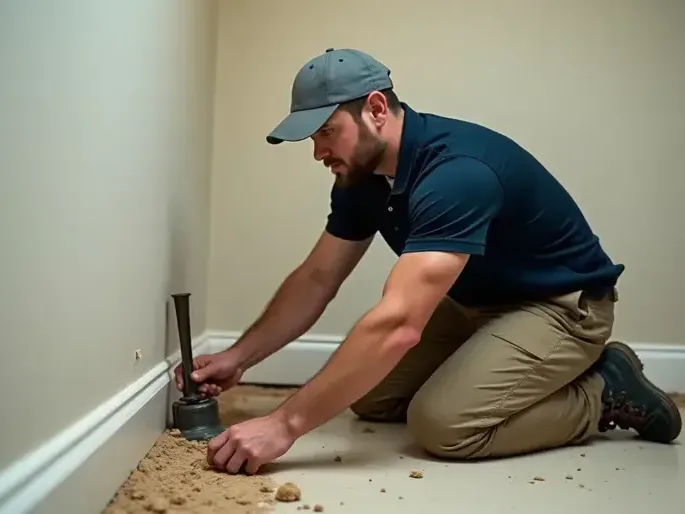
Moisture mapping
Pinless meters and a thermal camera trace the water under tile, behind baseboards and up the drywall before any equipment is set.
Extraction first
Truck-mounted units pull the free water off the slab, because one extraction pass removes far more water than days of evaporation.
Air movers and LGR dehumidifiers
Air movers are set to each room's evaporation load, and LGR dehumidifiers pull the moisture back out of the air.
Daily readings
Readings are logged once a day with temperature and humidity, the psychrometric record a claim file needs.
Dry verification
Equipment comes out when wet materials read within 2 to 4 points of a dry reference elsewhere in the home.
Clean, gray and black water are handled differently
The source sets the category, not the colour of the water, and the category decides what can be dried and what comes out.
Clean water
A supply line, a water heater or a slab leak in pressurized copper. It is dried in place when extraction starts before the water degrades.
Slab leak water damageGray water
Washer or dishwasher discharge, AC condensate, or clean water that sat for a day or two. Carpet pad usually comes out.
Appliance and supply line leaksBlack water
Sewage, a toilet overflow with waste, or storm runoff carrying mud off the hills. Porous materials it touched are removed, not dried.
Sewage backup cleanupHow long a dry-out takes, and how it ends
A contained Class 1 or Class 2 loss usually dries in three to five days. Concrete, hardwood and cabinets hold water longer, and a damp storm week in winter slows every dehumidifier.
The goal is a reading, not a date. Once wet materials sit within 2 to 4 points of a dry reference, drying ends and repairs can start. The drying time estimator gives a planning range for the rooms involved.
What does water damage restoration cost in Chatsworth, CA?
Water damage restoration in Chatsworth, CA typically runs $1,200 to $12,000 or more. The water category, the square footage that got wet, the material class and how fast drying started set where a job lands.
Ranges are typical, not a quote. A firm figure comes from the on-site walkthrough and the moisture map, and the cost calculator gives a closer planning range.
What an insurance claim file needs
A water claim is judged on the file. Sudden and accidental discharge, such as a burst supply line or a failed water heater, is usually treated differently from storm runoff or rising water, which falls under flood coverage.
Coverage depends on your policy, so check it and ask your own insurer. Slow leaks found late, like a pinhole under the slab, often raise questions, which is why the record starts on the first visit.
Inside a complete claim file
- A moisture map from the first visit
- Daily psychrometric logs and moisture readings
- Timestamped photos taken before any demolition
- The category and class of the loss
- A line-item scope in the format adjusters use
Inside a water damage dry-out
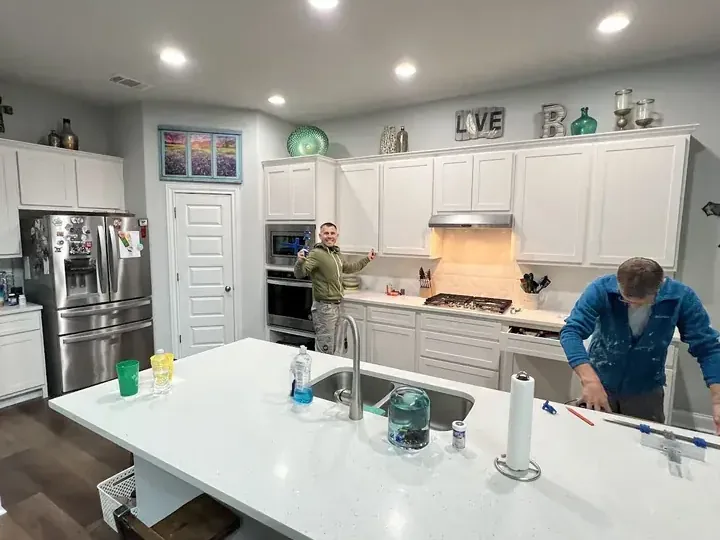
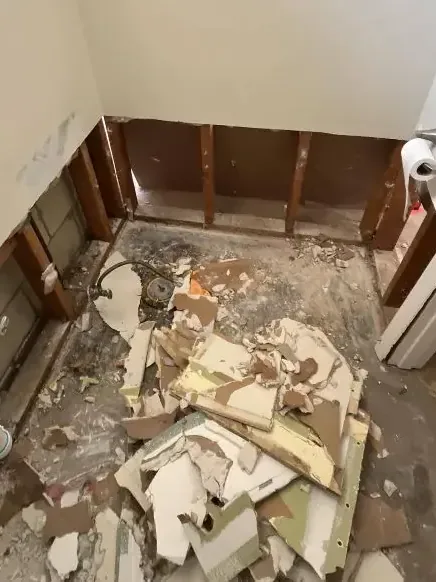
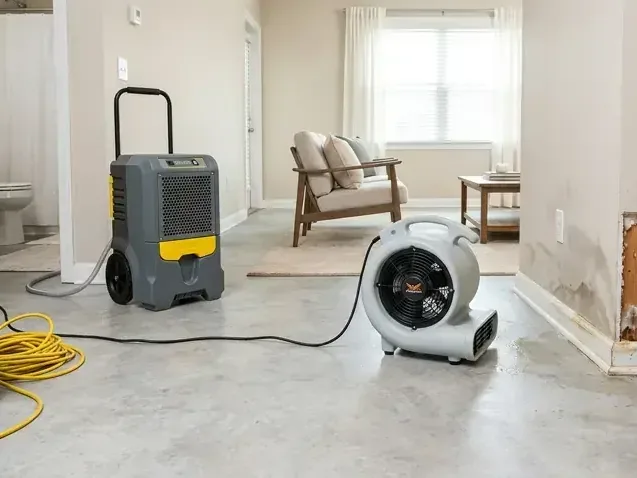
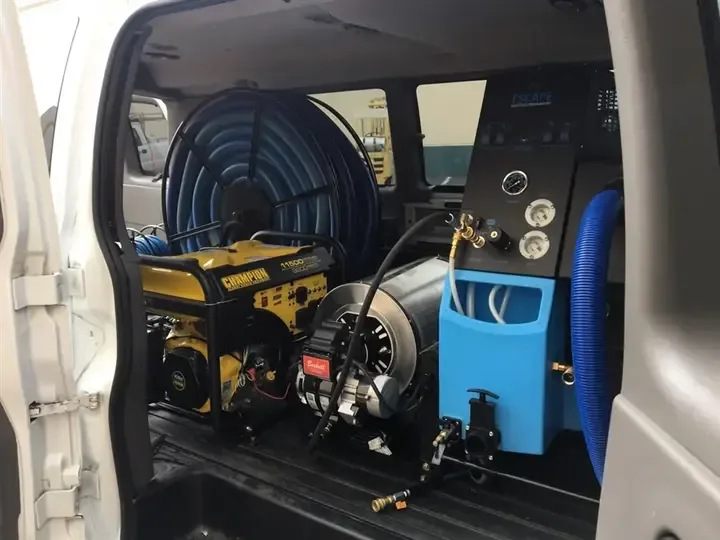
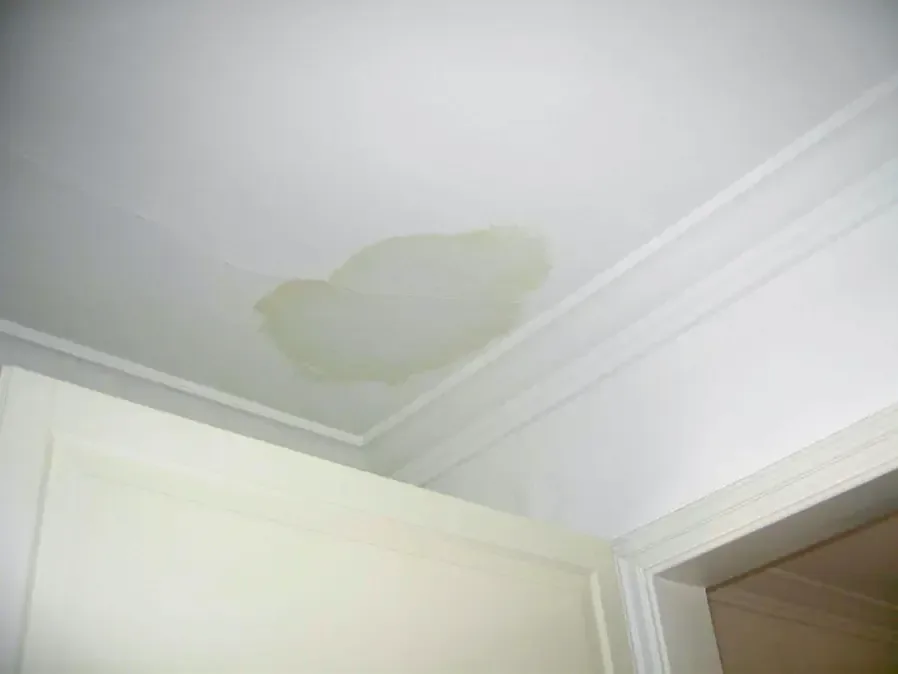
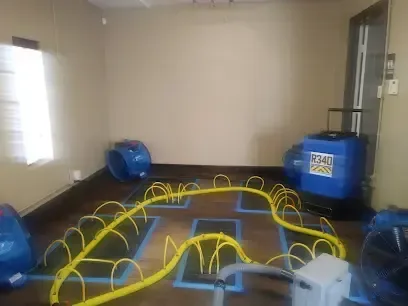
One call starts the dry-out, day or night
Local water damage pros cover the whole neighbourhood, from the Stoney Point foothills to the Nordhoff business parks. The address, the wet rooms and the source decide what equipment goes on the truck.
Water damage in Chatsworth: the local risk profile
Chatsworth sits where the Santa Susana Mountains and the Simi Hills meet the valley floor, on sandy ground over sandstone. Four patterns account for most losses here.
Copper under postwar slabs
Most homes were poured on slabs in the 1950s to 1970s with copper under the floor. Hard water and decades of pressure leave pinholes that show as warm tile and damp carpet edges, and the 1994 Northridge earthquake cracked slabs across the northwest Valley.
Attic air handlers in a long summer
Summers here run hotter than most of Los Angeles, and the AC often sits in the attic. A clogged condensate line and a failed float switch send water straight through the ceiling.
Hillside runoff in a short rain season
Most rain falls from December to March in a few Pacific storms. In February 2024 atmospheric river storms brought record rain to Los Angeles, and runoff off the hills carried mud into garages and patio doors.
Old sewer laterals and horse lots
Cast iron and clay laterals under mature trees crack and let roots in, and long buried lines to barns and tack rooms leak under slabs and patios for weeks.
Housing stock: single-story slab ranch homes from the 1950s to 1970s, horsekeeping lots, 1970s and 1980s townhomes, and hillside homes along Valley Circle Boulevard.
Chatsworth neighbourhoods, ZIP codes and nearby communities
Foothills and hills
Neighbourhood core
South and east tracts
ZIP codes
Nearby communities
Chatsworth water damage questions, answered
How fast does a restoration crew respond in Chatsworth?
Dispatch runs 24/7, and active water is treated as urgent at any hour, weekends and holidays included. Arrival depends on traffic on Topanga Canyon Boulevard and the 118 and on how many storm calls are open, so timing is confirmed on the phone.
What should be done before the crew arrives?
Close the main valve, switch off breakers to wet rooms if the panel is dry, turn off an attic AC that is dripping, and photograph everything before moving it. The first-hour steps above cover the order.
Will homeowners insurance cover the water damage?
Coverage depends on your policy. Sudden and accidental discharge, like a burst supply line, is usually treated differently from storm runoff, which falls under flood coverage. Check your own policy and ask your insurer; the claim file gives the adjuster what a decision needs.
What causes most water damage in local homes?
Pinhole leaks in copper under 1950s to 1970s slabs, attic AC condensate overflows in summer, hillside runoff in winter storms, cracked sewer laterals and failed water heaters lead the list. See slab leak water damage for the most common one.
How long does it take to dry out a house?
Three to five days for a contained Class 1 or Class 2 loss. A soaked slab, hardwood or cabinets can take one to two weeks. Equipment leaves when the readings say dry, not on a calendar.
What is IICRC S500?
IICRC S500 is the industry standard for professional water damage restoration. It sets how water is categorized, how drying is planned by class of loss, and how the work is verified with moisture readings against a dry reference.
When does wet drywall have to come out?
Drywall touched by Category 3 water comes out. Clean-water drywall can often be dried in place when extraction starts fast, unless it has swollen, crumbled or held water too long. Cutting the bottom of the wall, a flood cut, also lets the cavity dry.
Why is a sewage backup handled differently?
Sewage is Category 3 water from the start. The crew wears protective gear, contains the area, removes porous materials it touched and treats surfaces with an EPA-registered antimicrobial. See sewage backup cleanup.
How is the cost of a water damage job figured?
By the water category, the square footage that got wet, the material class and how long the water sat. The walkthrough tech maps moisture first, then writes a line-item scope. The cost calculator gives a planning range.
Can a slab leak be dried without tearing up the whole floor?
Often, yes. Once a plumber stops the leak, the drying team lifts only the flooring that reads wet, sets dehumidifiers and air movers over the slab and tracks readings until the concrete reaches the dry reference.
Water spreading across the slab? Get the dry-out started.
Water keeps wicking into baseboards, cabinets and drywall until someone pulls it out. The extraction crew works day and night across the northwest Valley.